All the World's A Stage
Besides all the other touristy London things, it’s been a priority for me to see as much theatre as possible. I have a long list of musicals that I want to see, including Aladdin, Les Miserables, Hamilton (I can dream), and Lion King. I had first seen Wicked for my 16th birthday in New York, so I figure I’d treat myself with a 10th anniversary re-watch this coming July.
So far I’ve seen two plays at The Globe, so I figured I’d put them both in this blurb.
Summer 2018
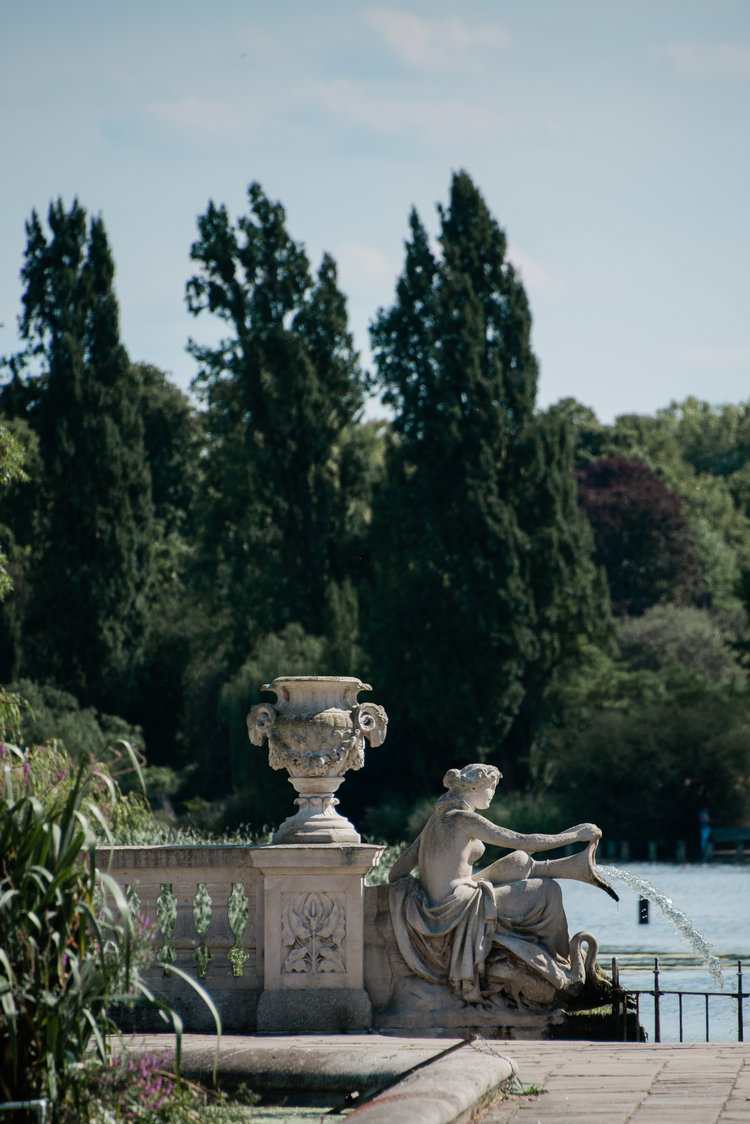
Shortly after getting back from the wedding, all the way back in August, Tom and I had plans to go see A Winter’s Tale at Shakespeare’s Globe. I’d been to London a few times now, but it’s always worth walking around when you have the chance so we did a few things before the play started. We met up at Platform 9 and 3/4, circumnavigated the hoard of muggles that had gathered there, and walked to The British Museum. We mainly kept to the Medieval and Ancient Egyptian exhibits, especially the parts that had bits we’d want to steal or copy for our re-enactment kit. This was still in the middle of the massive heat wave, and Tom had decided to wear black shirt and trousers so we walked around London trying to find a bit of water to cool off in. We walked around a few of the parks until we found a fountain we could put our feet into, and didn’t move from that spot until we had to go find food.
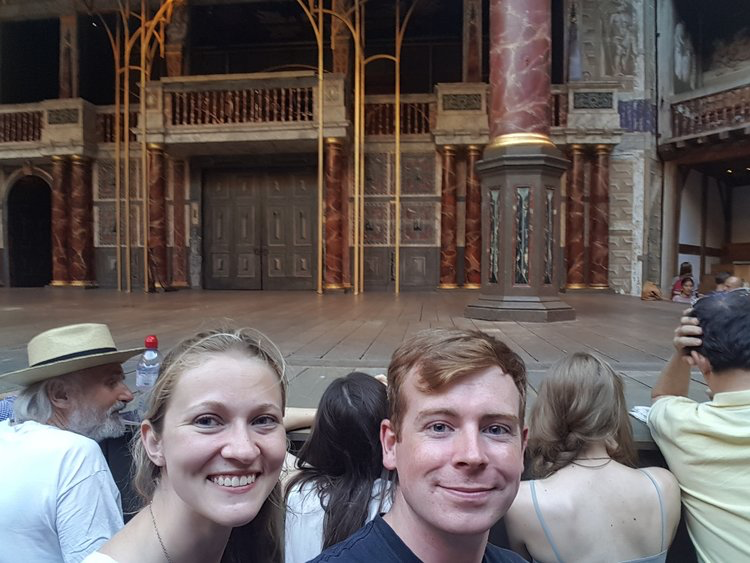
I’d been to the Globe twice before, once to see A Midsummer Nights Dream, and another time on a class tour, but this was a different experience. Firstly, I’d never seen and didn’t know the plot of A Winter’s Tale, beyond the infamous stage direction, “exit pursued by bear” so I was intrigued how that would play out. Also, last time I had seats, this time we opted for the £5 standing ticket. That was £5 well spent, it was an amazing show. The standing does get a bit tiresome and you can’t really shift without knocking into everyone near you, but being so close to the actors really draws you into the story and I got to high-five someone on stage. Standing with the other ‘penny stinkers,’ you could imagine how much more chaotic and smelly this place would have been in the 16th century; merchants hawking their wares, the drunk crowd heckling, the complete lack of toilets, and above it all the actors trying to ensnare the attention of their audience.
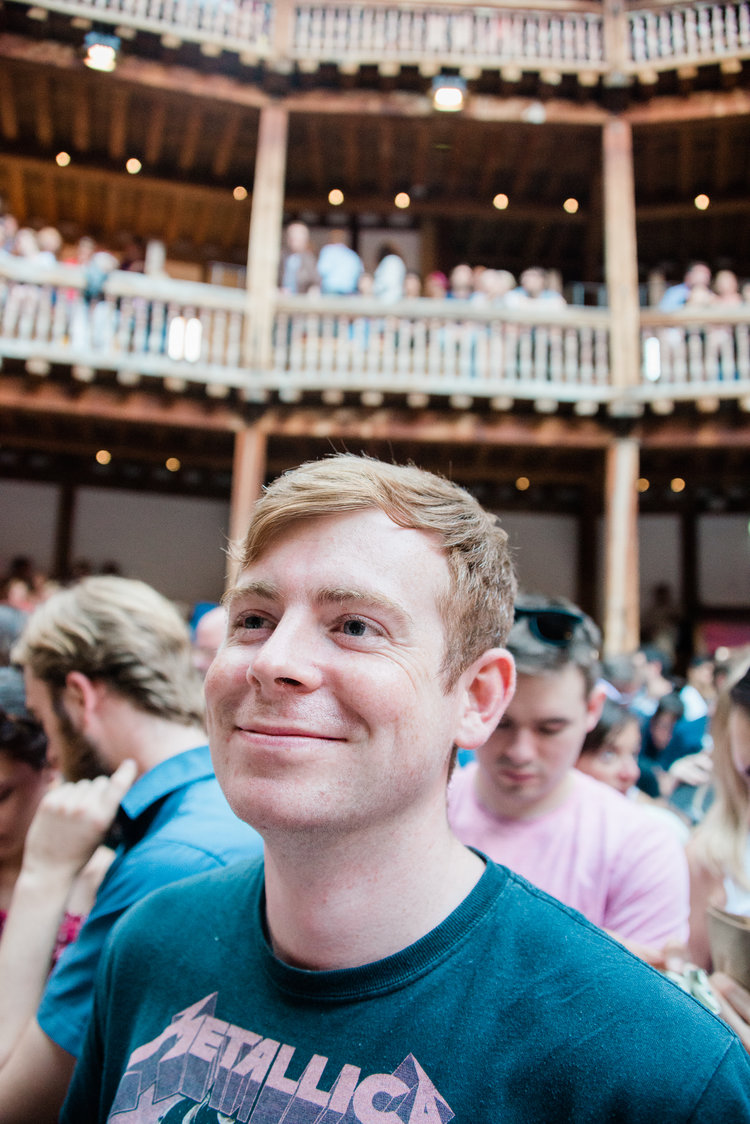
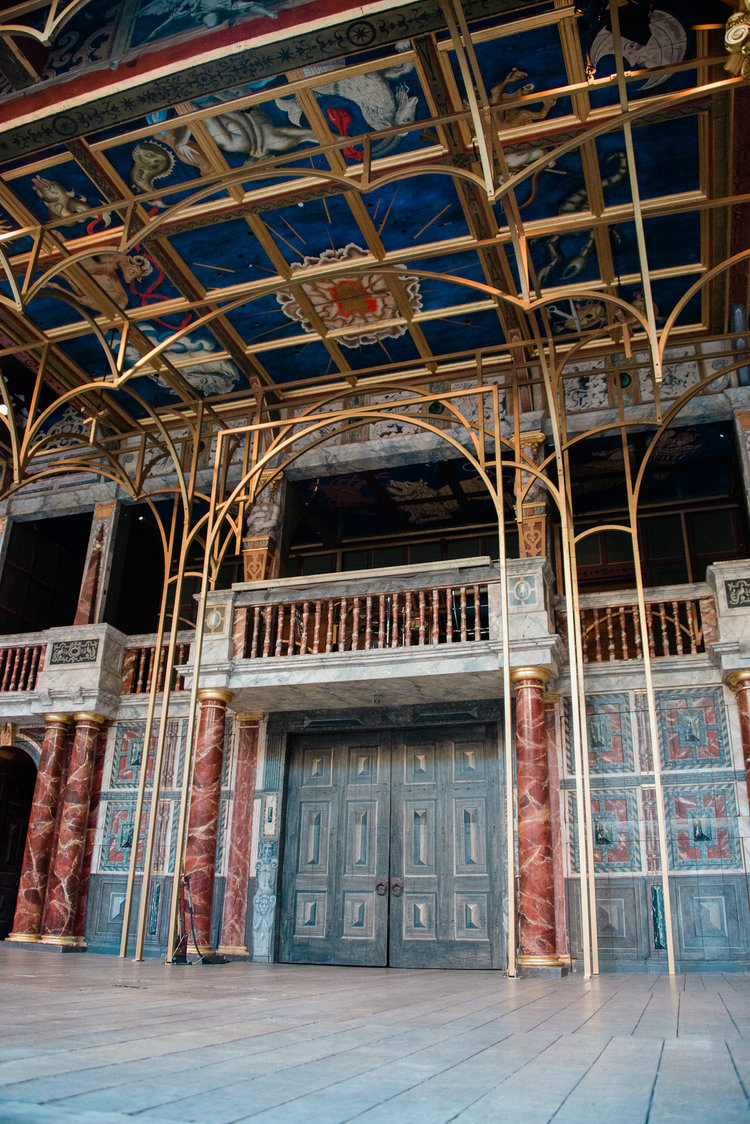
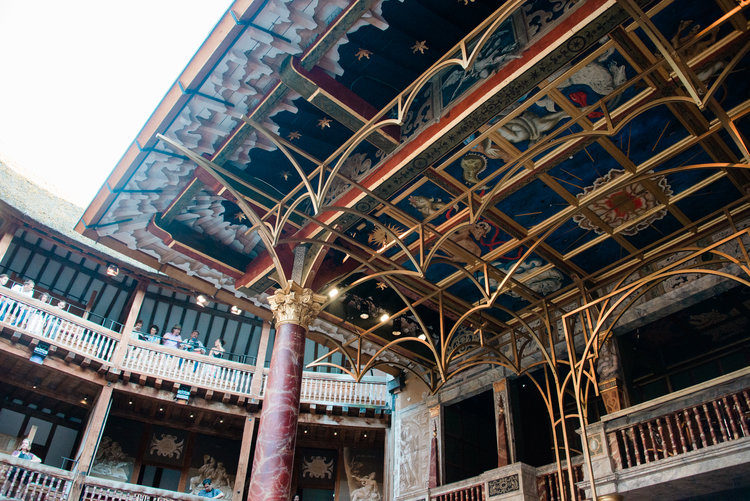
While it’s certainly not as well known as other plays, I really enjoyed Winter’s Tale. It has some really strong female characters with good monologues, and the plot would almost fit as a part 2 of Othello, if the character actually had to live with the consequences of falsely accusing his wife. The ‘exit pursued by bear’ was a tad anti-climatic, but given that PETA probably wouldn’t stand for the historical accurate habit of having a real bear on stage, I suppose dropping a poster was a reasonable substitute.
Winter 2019
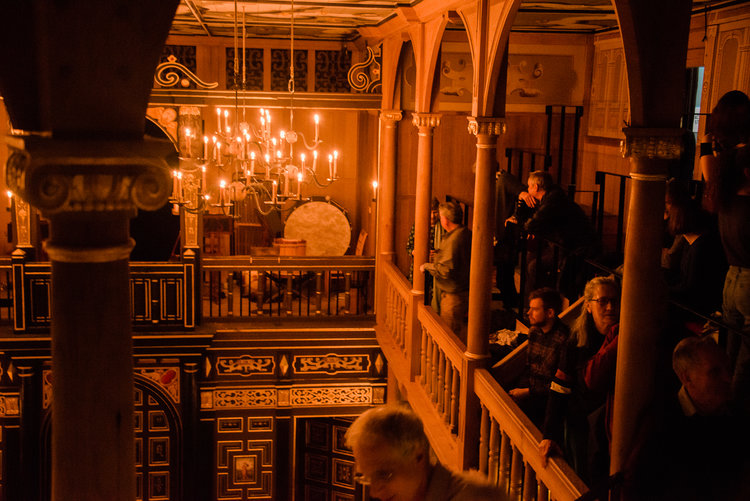
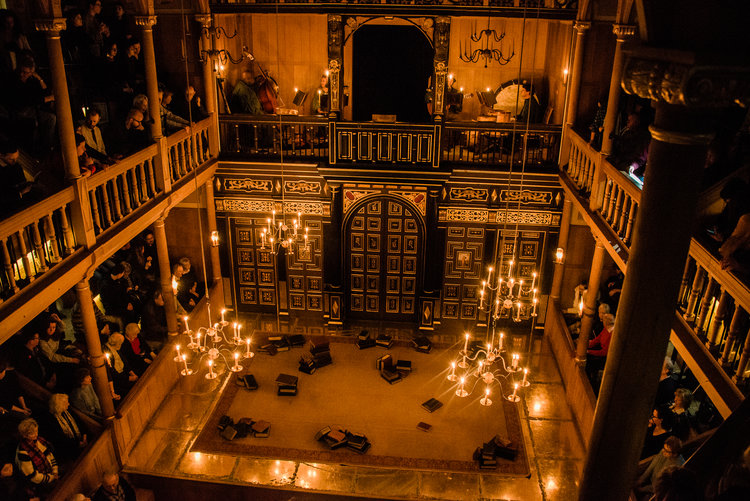
The lesser known theatre on the site is the Sam Wanamaker Theatre, the indoor counter part of Shakespeares’s Globe. In the 17th century, when theatre was becoming more popular, the upper classes decided that, while they loved coming to the theatre, they didn’t enjoy the pesky smelly peasants being there too. Originally, theatres were not allowed to be built inside London’s city walls, they were all across the Thames in Southwark, but this changed in the early 1600s, when Shakespeare’s Company, The King’s Men, came to their new theatre in Blackfriars.
This was a theatre for the upper-classes. The cheapest seats here were the same price as the most expensive seats at the outdoor theatres. All the seats had cushions, the room no longer smelt like a stable, and they could enjoy an evening of sophistication and grandeur.
This was the world we walked into. The ‘majestical roof,’ was brightly illuminated in the flickering candlelight and supported by great white pillars. The stage was metallic, and reflected the chandeliers, casting everything in a golden glow. Compared to the open air Globe, this place felt private and special, you wouldn’t want to raise your voice here, you might break the spell.
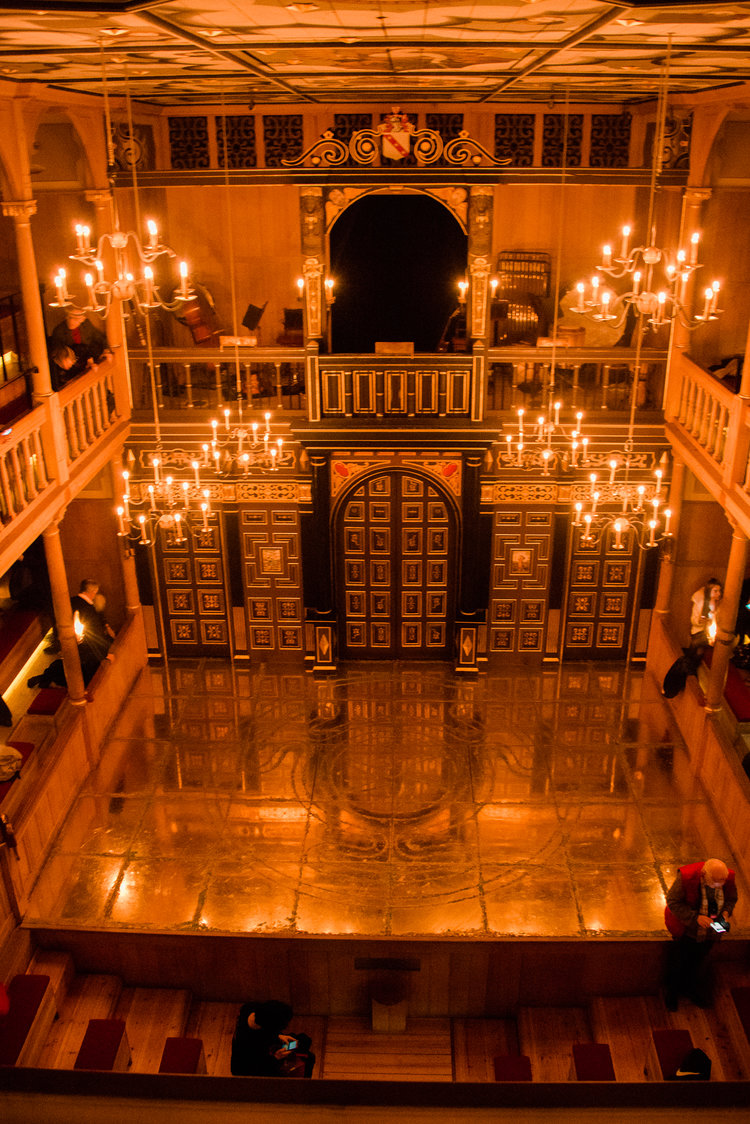
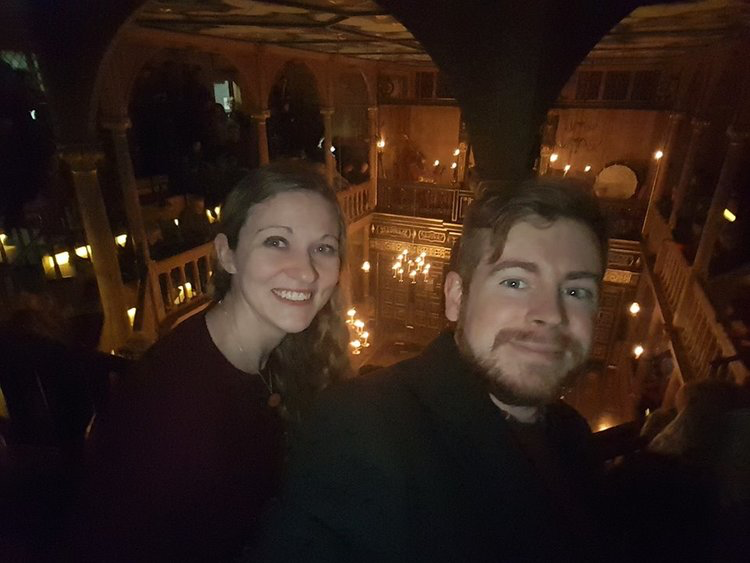
For our second theatre excursion, Tom and I had come to see The Tragical History of the Life and Death of Doctor Faustus, one of Christopher Marlowe’s masterpieces. The story was based on a German narrative of a man, who in his search for knowledge, sells his soul to the devil. Tom was slightly indignant at Faustus’ dismissal of the study of law, that, ‘This study fits a mercenary drudge, Who aims at nothing but external trash.’ Faustus then summons Mephistopheles, the demon who is sent to serve Faustus, who reminded me of Endora, the witch mother-in-law from the old TV show Bewitched (both Faustus and Mephistopheles were played by women). The ‘special effects’ they used were amazing; nothing modern, nothing that the Jacobean theatre’s couldn’t have done, but their use of lights, trap doors, masques, costumes, music, sparks, and fake legs was brilliant.
One question that we often came back to in my Early Modern Theatre literature class was, ‘Why Shakespeare?’ There were plenty of playwrites, all doing very similar things, so why is he a part of every English curriculum while most people havn’t heard of Ben Jonson or Thomas Dekker? Quite simply, because Shakespeare is better. Even compared to Marlowe, who was very popular in his day, his lines and plots just don’t have the same sophistication and complexity that Shakespeare’s do. One thing that bugged me about the play was that Faustus sells his soul to the devil (generally a bad idea), but then uses these unlimited powers to play a few jokes on some Catholics and perform magic shows for nobility. You’d think you’d be a bit more creative if you knew you were guaranteed eternal damnation. I started to get into this conversation with a group of drama students who were there on a class trip, to which Tom shook his head, complaining, ‘you can’t take extroverts anywhere.’
Theatre is a magical place, and I can’t wait to see more shows in these unique spaces.